
Photoluminescent Tape: Technical Guide | Marine Lite
Marine Lite · Technical Guide
Explore the fundamentals of photoluminescent tape, its performance characteristics, relevant standards, its role in maritime Low Location Lighting (LLL), and key considerations for purchasing.
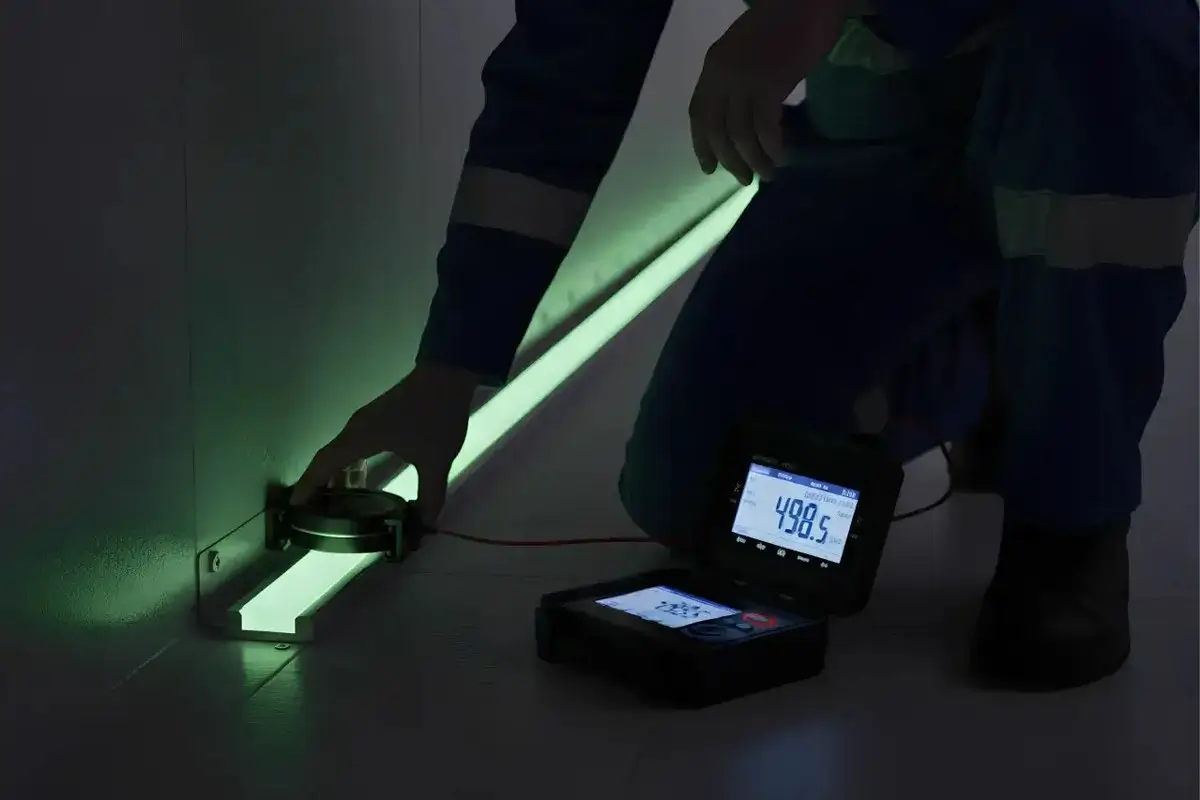
Summary: Photoluminescent tape effectively absorbs ambient light energy, releasing it as visible light when the surroundings darken, without requiring electricity.
The Basics
Non-electrical Solution
Photoluminescent tape functions without batteries or wiring, relying solely on stored light energy for illumination.
Beyond "Glow in the Dark"
Its technical performance is rigorously evaluated under specific charging and measurement conditions.
Application-Specific Standards
Different standards govern building escape routes and maritime LLL, necessitating a tailored approach.
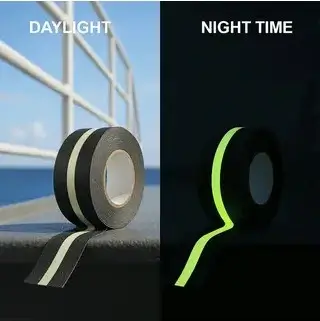
Ambient light sources such as LED, fluorescent, and daylight charge the material, allowing stored energy to be released as visible guidance in darkness.
Performance Insight
The duration of glow varies. Performance is influenced by charging illuminance, duration, spectrum, material formulation, darkness conditions, and required luminance levels.
Conceptual Visualization
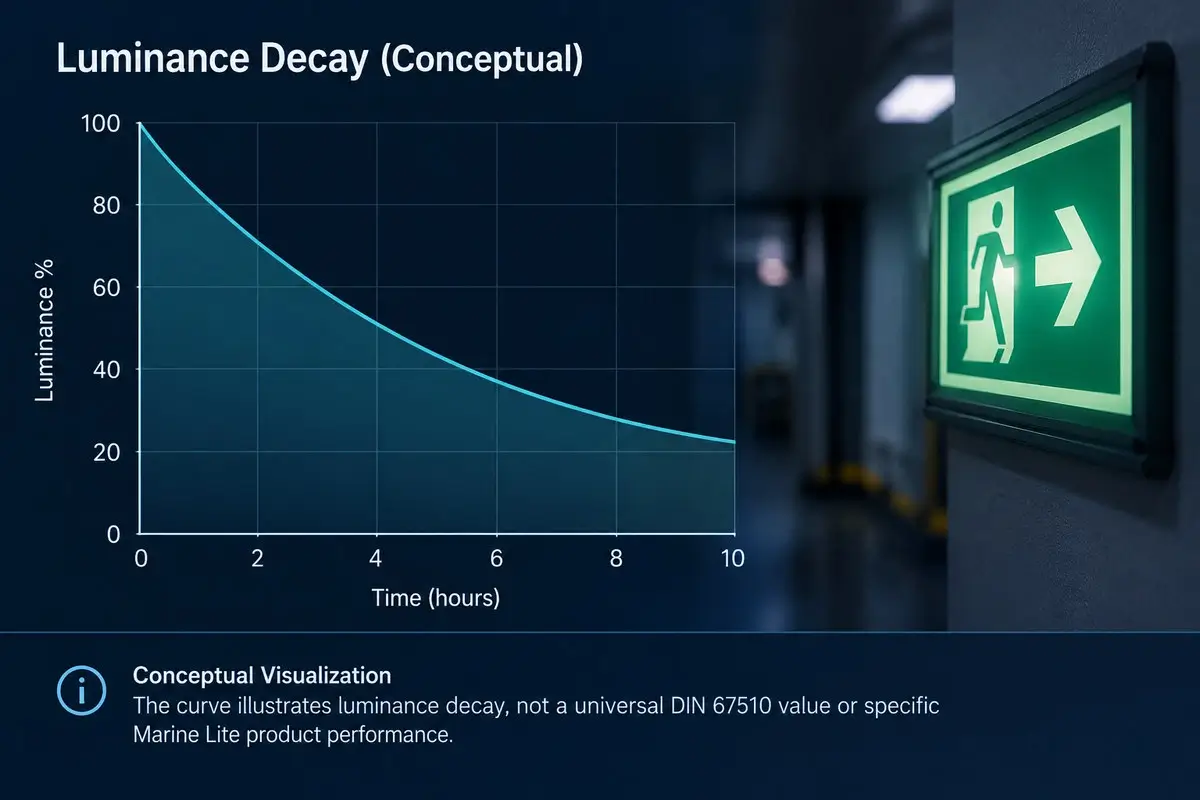
The curve illustrates luminance decay, not a universal DIN 67510 value or specific Marine Lite product performance.
Indoor LED Lighting
Modern LED lighting can effectively charge photoluminescent materials, but performance depends on the actual light exposure the tape receives. Specify charging conditions for a precise evaluation.
Photoluminescent vs Reflective
| Property | Photoluminescent | Retroreflective |
|---|---|---|
| External light needed while viewing? | Emits stored light after charging. | Yes, returns light to the source. |
| Useful post-power failure? | Yes, based on charged performance and application needs. | Only if an external light source is present. |
| Typical Use | Path marking, guidance, identification. | Visibility with headlights, torches, etc. |
Standards: Choose the Right One
Understanding the distinction between material/product performance and system/application standards is crucial. Standards are not interchangeable.
| Reference | Relevance |
|---|---|
| DIN 67510 | Classification of photoluminescent materials under specific test conditions. |
| ISO 15370:2021 + Amd 1:2023 | Low-location lighting for passenger ships. |
| IMO A.752(18) | Guidelines for LLL evaluation, testing, and application on passenger ships. |
| ISO 16069:2017 | Safety way guidance systems; excludes ships under IMO regulations. |
| EN 1838:2024 | Emergency lighting for buildings; ELOT EN 1838:2025 is Greece's national adoption. |
Important: Statements like “Class C is required in Europe” are too broad without specifying jurisdiction, application, system design, and requirements.
DIN 67510 classes — Buyers should request the edition, tested classification, charging and measurement conditions, and technical documentation. Avoid comparing class letters as universal brightness indicators.
Maritime Low Location Lighting (LLL)
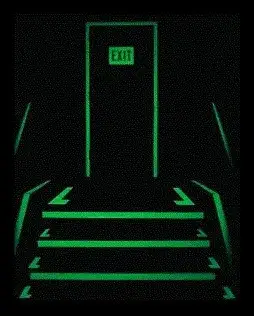
Photoluminescent components on passenger ships contribute to LLL systems, supporting evacuation guidance when normal lighting is unavailable. Compliance involves assessing the system against IMO, flag, class, and project requirements.
Design
Focus on system layout, markings, escape-route logic, and requirements.
Installation
Ensure correct placement, substrate preparation, and product suitability.
Inspection
Conduct measurements and document under defined conditions as required by applicable frameworks.
Marine Lite manufactures photoluminescent tapes and related safety products in-house and is a Lloyd’s Register Approved Service Supplier for inspecting LLL systems using photoluminescent materials and evacuation guidance systems as LLL alternatives.
For projects, confirm inspection intervals and acceptance criteria against applicable ship, flag, class, and statutory requirements.
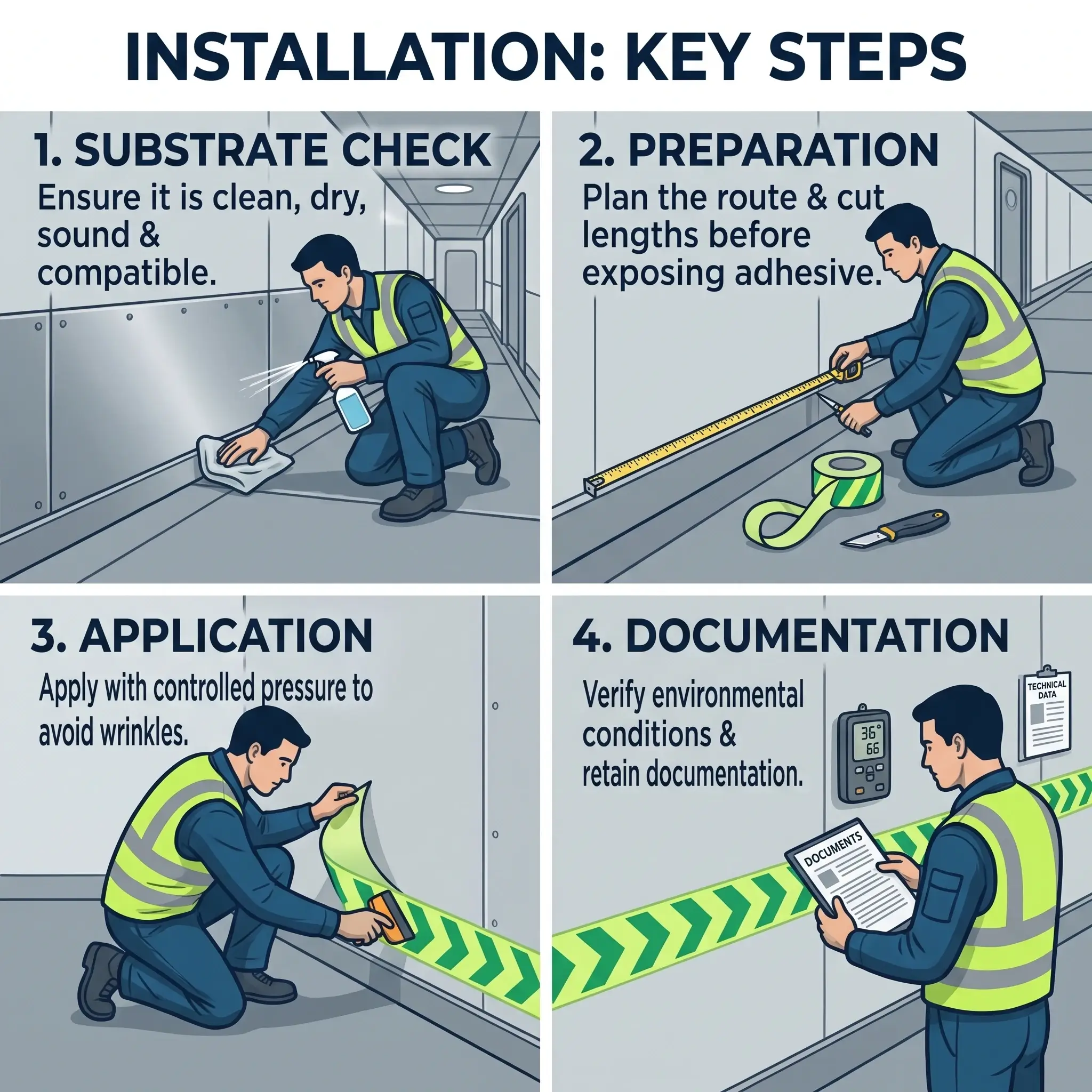
Installation: Key Steps
-
Substrate Check
Ensure it is clean, dry, sound, and compatible with the adhesive/product specification.
-
Preparation
Plan the route and cut lengths before exposing the adhesive.
-
Application
Apply with controlled pressure to avoid wrinkles, contamination, and stretching.
-
Environmental Considerations
Temperature, moisture, abrasion, chemicals, and outdoor exposure affect product selection and adhesion.
-
Documentation
For safety-critical installations, retain product identification and technical documentation.
Buying Guide
- Intended application: marine LLL, building escape routes, stairs, industrial marking, etc.
- Applicable standard and edition — beyond generic “compliant” claims.
- Measured photoluminescent performance under specified test conditions.
- Dimensions: width, length, thickness, and required geometry.
- Adhesive/substrate compatibility and installation temperature.
- Anti-slip performance for stair or floor marking applications.
- Environmental exposure considerations: UV, water, temperature, abrasion, and chemicals.
- Product-specific documentation for REACH/RoHS or other declarations.
Need an LLL inspection or Photoluminescent tapes?
Marine Lite manufactures photoluminescent tapes and is approved by LRQA (BS EN ISO 9001:2015). Also offers Inspections Of Low Location Lighting Systems Using Photo Luminescent Materials And Evacuation Guidance Systems Used As An Alternative To Low-Location Lighting Systems as a Lloyd's register approved service supplier.
Contact Marine Lite →FAQ
Can photoluminescent tape be used outdoors?
Yes, but select products based on actual exposure conditions. Not all tapes are suitable for continuous outdoor UV, water, freezing temperatures, or heavy abrasion.
Can it be applied to concrete stairs?
Yes, if the specific product and adhesive suit the substrate and application. For stairs, consider anti-slip performance and mechanical durability in addition to photoluminescent performance.
Is ISO 16069 the maritime LLL standard?
No. ISO 16069 covers safety way guidance systems but excludes ships under IMO regulations. Use ISO 15370 and IMO guidance for passenger-ship LLL assessments.
Is ISO 15370:2010 still valid?
No. It was replaced by ISO 15370:2021, with Amendment 1 published in 2023.
How long does photoluminescent tape glow?
Performance declines over time after light removal. Focus on measured luminance under specific charging and measurement conditions rather than a generic “hours of glow” figure.
Technical Note: Standards and regulations can change. For safety-critical procurement, verify the current edition and requirements for the specific project, vessel, flag, class, and jurisdiction.
Marine Lite · Photoluminescent safety tapes & LLL expertise · Greece
This guide serves as a concise technical reference and is not a substitute for project-specific regulatory assessments.